Piezoelectric MEMS Microphone: Redesign and FEM Simulation
Department of Microsystems, USN · Norway · Spring 2025 · Academic project · Group of 4; the COMSOL model documented here is my own
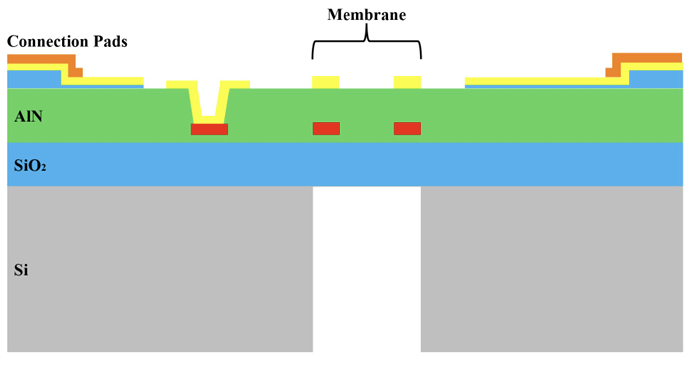
Replicated a published AlN MEMS microphone in COMSOL, validated the model against the paper, then re-engineered materials and geometry for a roughly threefold sensitivity gain tuned to wildlife acoustics.
- COMSOL
- MEMS
- Piezoelectrics
- FEM
- Acoustics
Overview
A design study that starts from a published CMOS-compatible aluminium nitride microphone, reproduces its behaviour in simulation, and then asks: what would it take to make this microphone better suited to monitoring elk vocalizations (roughly 100 to 3500 Hz)?
Technical approach
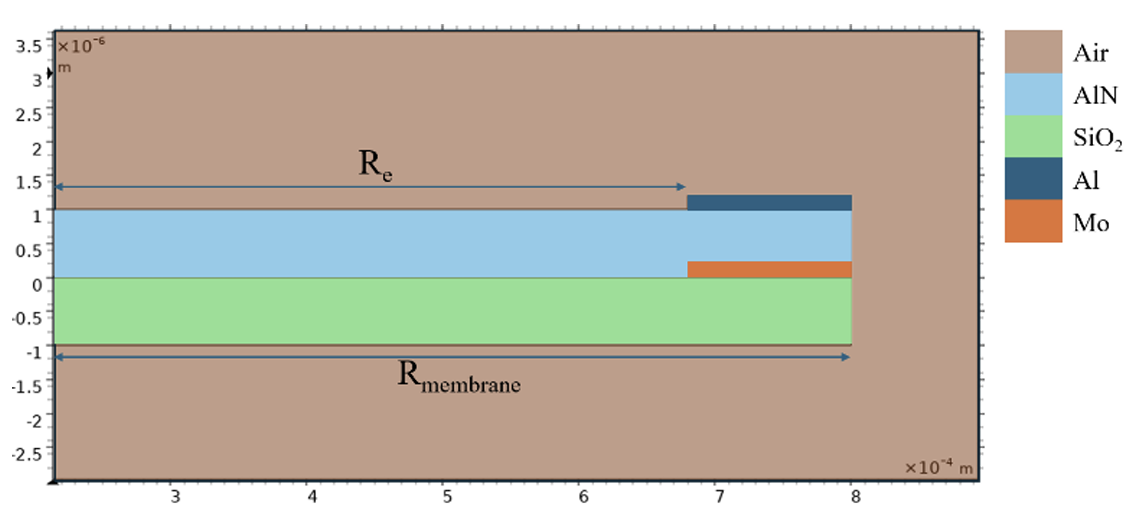
- 2D axisymmetric COMSOL model coupling solid mechanics and electrostatics with piezoelectric coupling: SiO2 and AlN layers, Al/Mo electrodes, and an air domain with moving mesh
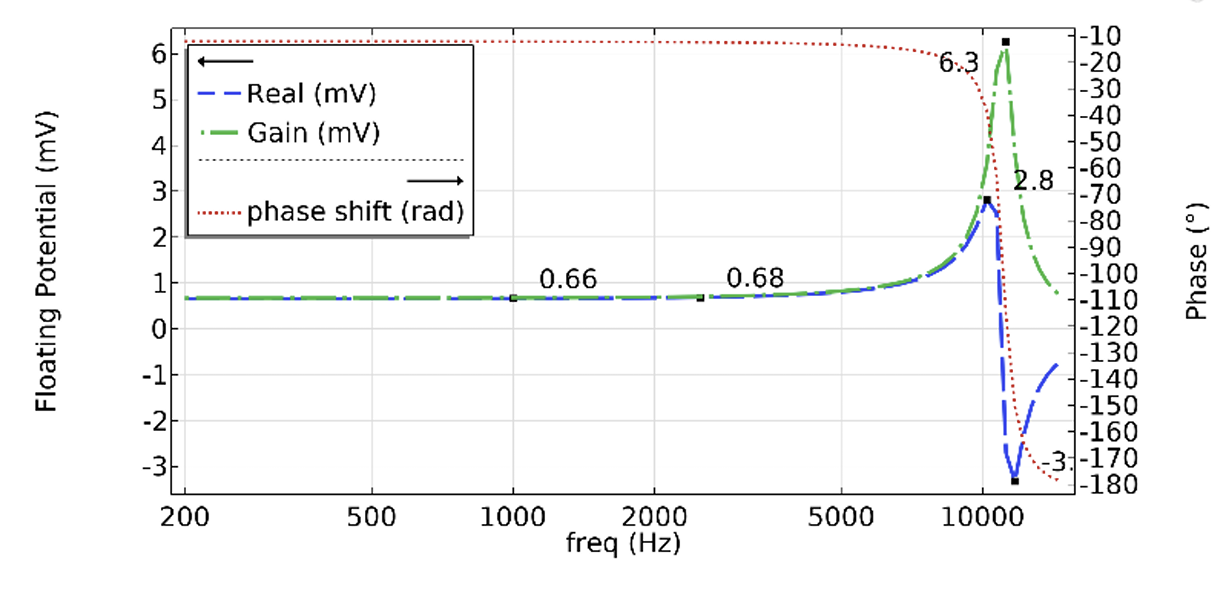
- Eigenfrequency, frequency-domain (200 Hz to 13 kHz), and linearity (0.1 to 10 Pa) studies
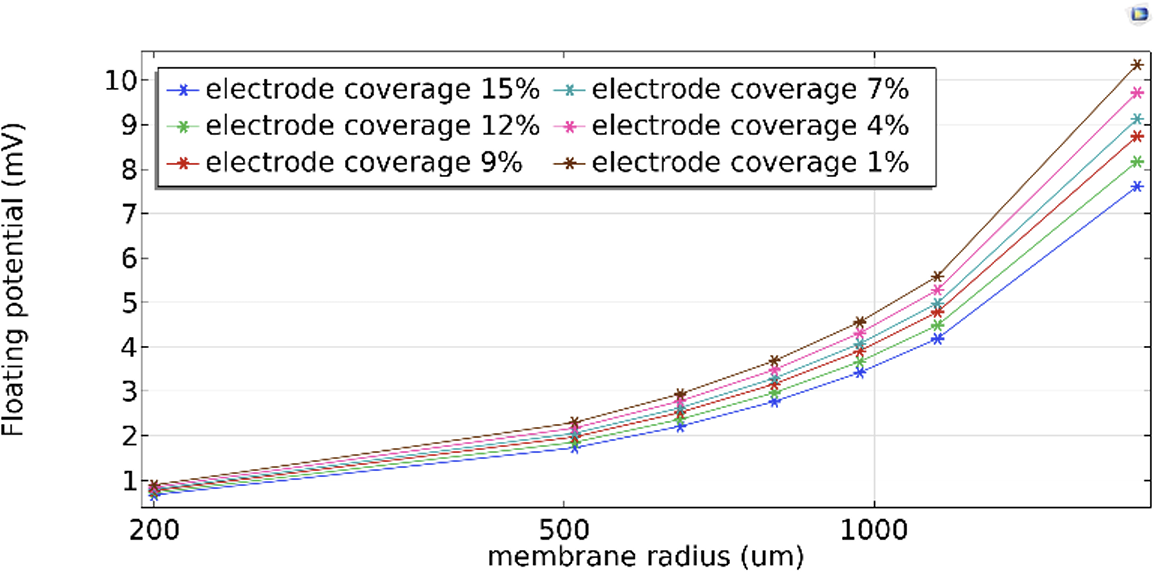
- Material screening across AlN, ZnO, PZT, and LiTaO3, plus thickness and radius sweeps
- Cross-checked against analytical resonance estimates and an equivalent-circuit model
Results
- Baseline model reproduced the published design at 1.1 mV/Pa sensitivity with resonance near 11.2 kHz
- Final redesign (ZnO piezoelectric layer, polyimide passivation, 600 um radius) reached 3.21 mV/Pa off-resonance at 1 kHz with resonance tuned to about 4.87 kHz
- Linearity held across the tested pressure range with R-squared of 0.99995
Constraints and lessons
Material substitution bought most of the sensitivity gain, but every change traded against CMOS process compatibility, which the report evaluates for each candidate material.
Media